Discover how Disney Cruise Line crew members train for emergencies, guest safety, security, evacuations and more through extensive onboard safety training.
When you step aboard a Disney Cruise Line ship, there is a lot happening behind the scenes that guests never see.
From the moment a new crew member arrives onboard, safety becomes part of their daily routine.
Whether someone is working in a restaurant, operating a lifeboat, cleaning staterooms, entertaining families or navigating the ship as an officer, every crew member has a role to play when it comes to safety.
And it goes far beyond simply knowing where the emergency exits are.
Disney Cruise Line crew members complete extensive maritime safety training covering everything from emergency evacuations and security awareness to first aid, crowd management and marine evacuation systems.
The goal is simple: make sure crew members are prepared to act when it matters most.
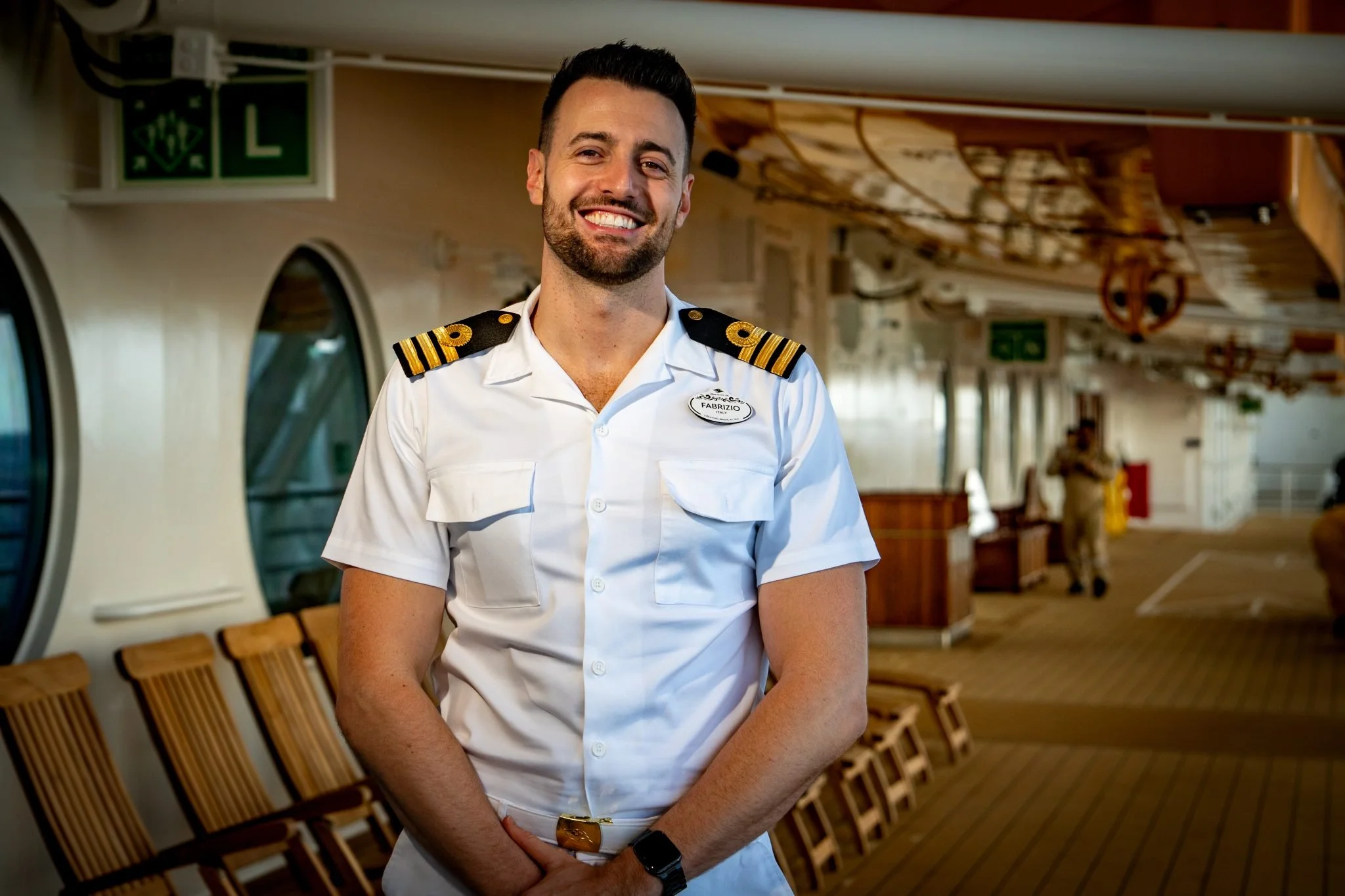
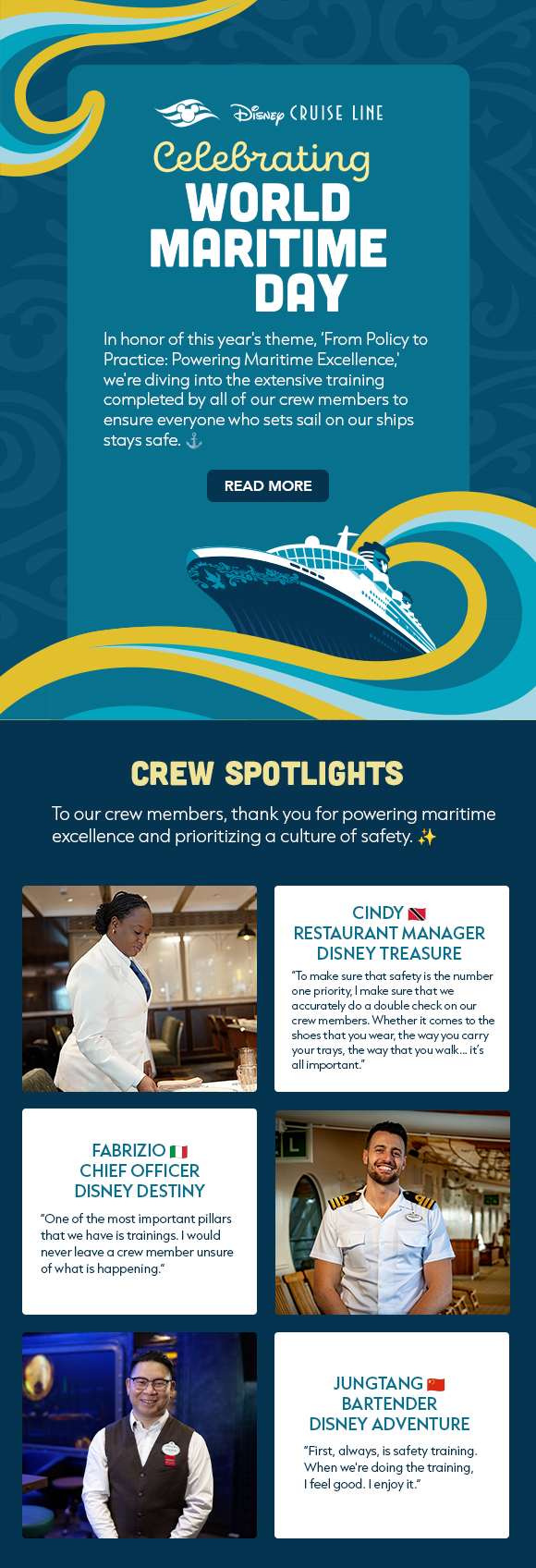
As Fabrizio, Chief Officer aboard the Disney Destiny, explains:
“One of the most important pillars that we have is trainings. I would never leave a crew member unsure of what is happening.”
So, what exactly does that training look like?
Safety Training Starts From Day One
Many Disney Cruise Line crew members arrive with maritime certifications and experience from previous positions at sea. Others may be building upon their existing knowledge as they begin their first Disney contract.
Regardless of their background, safety training is an important part of becoming a member of the Disney Cruise Line team.
New crew members learn the ship, emergency procedures and their individual responsibilities so they understand what to do if an emergency occurs.
And the training doesn't simply stop after completing an initial class.
Crew members regularly practice these procedures throughout their careers onboard.
Safety Familiarization: Learning the Basics
One of the first areas of training focuses on basic safety familiarization.
Across two courses, crew members learn important information such as:
Where to find their assigned muster and embarkation stations
Emergency escape routes
What to do when a fire alarm sounds
What happens when the abandon-ship alarm is activated
How to respond to medical emergencies
Their individual responsibilities during an emergency
Knowing this information before an emergency occurs is critical.
When something unexpected happens at sea, crew members need to know their responsibilities without having to figure them out in the moment.
Security Awareness
Safety isn't limited to fire drills and evacuations.
Disney Cruise Line crew members also receive security training designed to help them recognize and respond to potential security threats.
Two security awareness courses cover topics including:
Recognizing suspicious behavior
Reporting potential security concerns
Ship security levels
Maritime security threats
Emergency and contingency procedures
It's another example of how safety becomes part of the everyday culture onboard.
Even the Small Details Matter
Safety can also be found in the smallest details of a crew member's job.
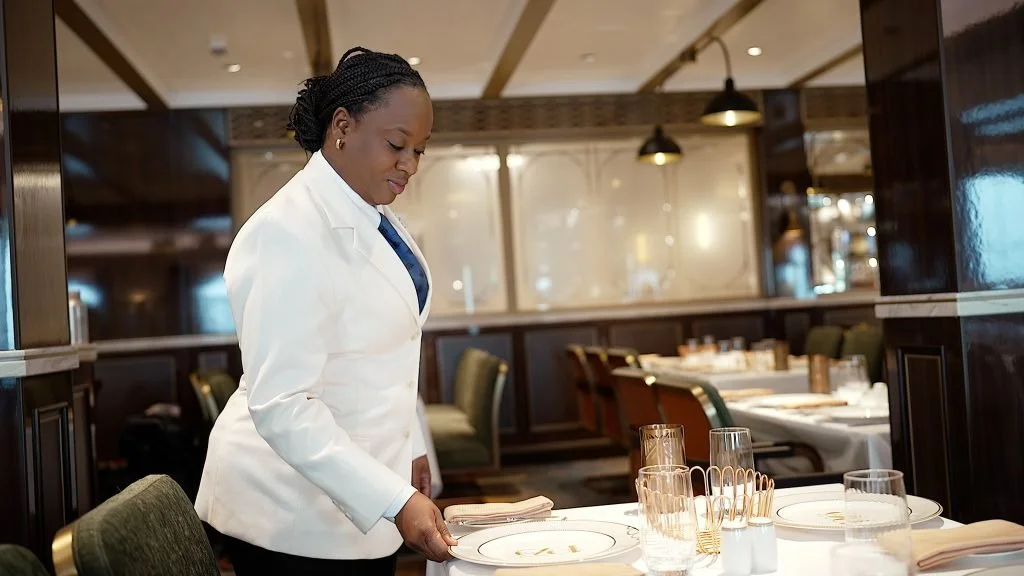
Cindy, a Restaurant Manager aboard the Disney Treasure, explains that her team pays attention to things guests might never think about.
“Whether it comes to the shoes that you wear, the way you carry your trays, the way that you walk... it’s all important.”
That might sound like a simple part of restaurant operations, but on a moving ship filled with guests and crew, small details can make a big difference.
From carrying food and beverages to navigating busy dining rooms, crew members are trained to perform their jobs safely while continuing to provide the Disney service guests expect.
Marine Evacuation Systems
One of the most recognizable pieces of emergency equipment onboard a cruise ship is the Marine Evacuation System, or MES.
These systems use an inflatable slide or chute connected to inflatable life rafts to help evacuate people from the ship during an emergency.
Crew members receive specialized training on how these systems work and how to assist with their operation.
The objective is to make sure crew members can help guests move safely and efficiently if an evacuation ever becomes necessary.
Personal Safety & Social Responsibility
Another important part of maritime training is Personal Safety & Social Responsibility, often referred to as PSSR.
This training goes beyond emergency procedures and focuses on the responsibilities crew members have toward themselves, their fellow crew members, guests and the environment.
Topics include:
Accident prevention
Marine pollution prevention
Seafarers' rights and responsibilities
Harassment and bullying
Personal responsibility and safety
Working safely with others
It reinforces an important part of life at sea: everyone has a responsibility for maintaining a safe environment.
Crew Drills Aren't Just a One-Time Event
Here's something that may surprise some first-time cruisers.
Crew emergency drills aren't simply something new employees complete once and then forget about.
Within their first two weeks onboard, new crew members participate in a crew drill.
But the practice continues throughout their time with Disney Cruise Line.
Crew members regularly practice emergency procedures, including the evacuation process and the operation of lifeboats and life rafts.
General safety drills are conducted every other week, giving crew members ongoing opportunities to practice their responsibilities.
That's important because emergency procedures need to become familiar.
When you're dealing with thousands of guests and a ship at sea, there isn't much room for hesitation.
Passenger Ship Safety Training
Crew members working aboard a passenger vessel also receive Passenger Ship Safety Training, or PSST.
This training focuses specifically on safely managing passengers during an emergency.
Crew members learn how to:
Manage crowds
Organize the safe movement of guests
Communicate effectively during an emergency
Assist with passenger evacuation procedures
Carry out their assigned responsibilities during emergency situations
For Disney Cruise Line, this is especially important because crew members aren't just responsible for themselves.
They're responsible for helping thousands of guests, including children and families, understand where to go and what to do during an emergency.
First Aid Training
Medical emergencies can happen anywhere — including at sea.
That's why crew members also receive Elementary First Aid training.
This includes basic life-saving skills and instruction covering situations such as:
CPR
AED awareness
Controlling bleeding
Burns
Fractures
Sprains
Other common injuries
The training gives crew members the knowledge to respond when immediate assistance is needed.
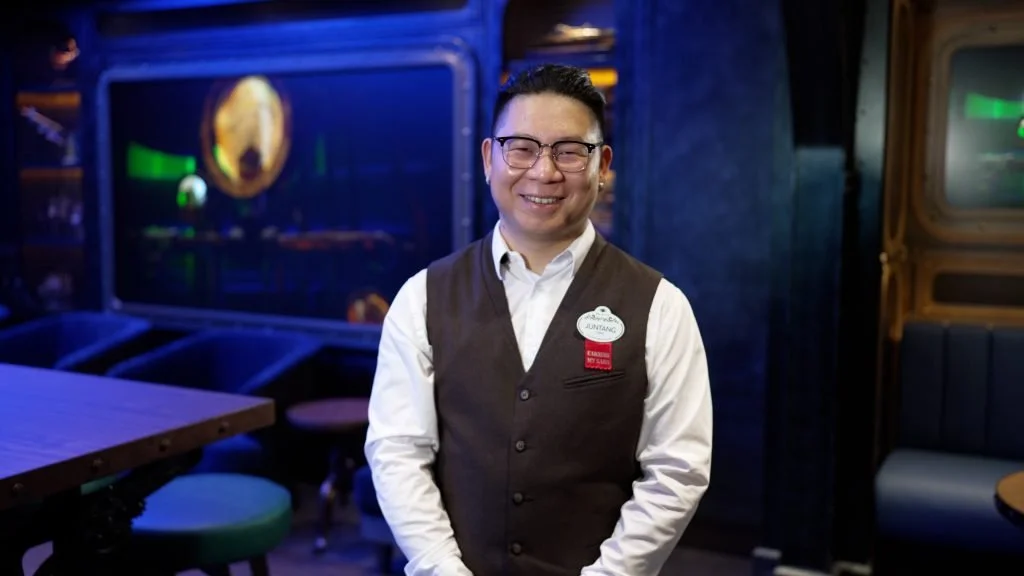
As Jungtang, a bartender aboard the Disney Adventure, puts it:
“First, always, is safety training. When we're doing the training, I feel good. I enjoy it.”
Safety Is Part of the Disney Cruise Line Culture
One of the biggest takeaways from Disney Cruise Line's safety training is that it isn't limited to the ship's officers or a specialized safety team.
It's everyone's responsibility.
A bartender needs to understand safety procedures.
A restaurant manager needs to understand them.
A stateroom attendant needs to understand them.
Entertainment teams, youth counselors, dining teams, housekeeping, deck crew and officers all have their own responsibilities when it comes to keeping guests and fellow crew members safe.
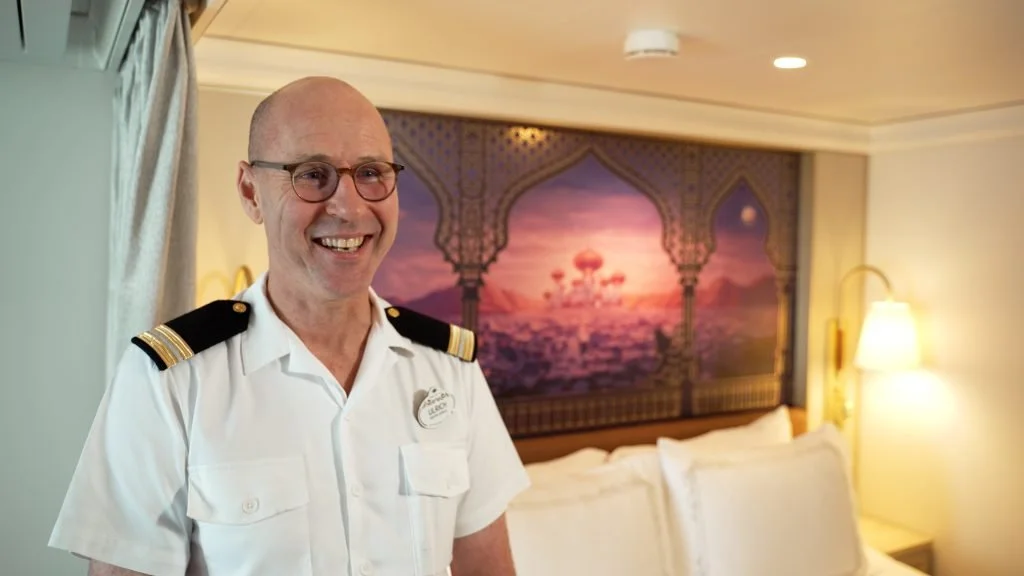
Ulrich, an Assistant Housekeeping Manager aboard the Disney Destiny, describes that approach this way:
“Safety is always our number one priority. We do a lot of training, both one-on-one training and group training.”
That ongoing training helps ensure crew members aren't simply aware of Disney Cruise Line's safety policies — they know how to put those policies into practice.
Training Doesn't Stop After the First Contract
Whether a crew member is sailing their first Disney contract or their fifteenth, safety remains an ongoing part of life onboard.
Procedures are practiced.
Emergency equipment is reviewed.
Crew members participate in drills.
And teams continue to receive training throughout their Disney Cruise Line careers.
For guests, much of this work happens quietly in the background.
And that's exactly how it should be.
The next time you walk onto a Disney Cruise Line ship, take a moment to think about everything happening behind the scenes.
Thousands of crew members aren't just there to create magical vacation memories. They're also trained and prepared to help keep those guests safe while they're at sea.
Safety isn't just a policy written in a manual. It's something Disney Cruise Line crew members practice every day.
Thank you to Life at Disney for the original article and photos.